Freedom of Information: A Pillar of Democracy
The strength of a democracy lies not in the loudest voices, but in the most informed ones
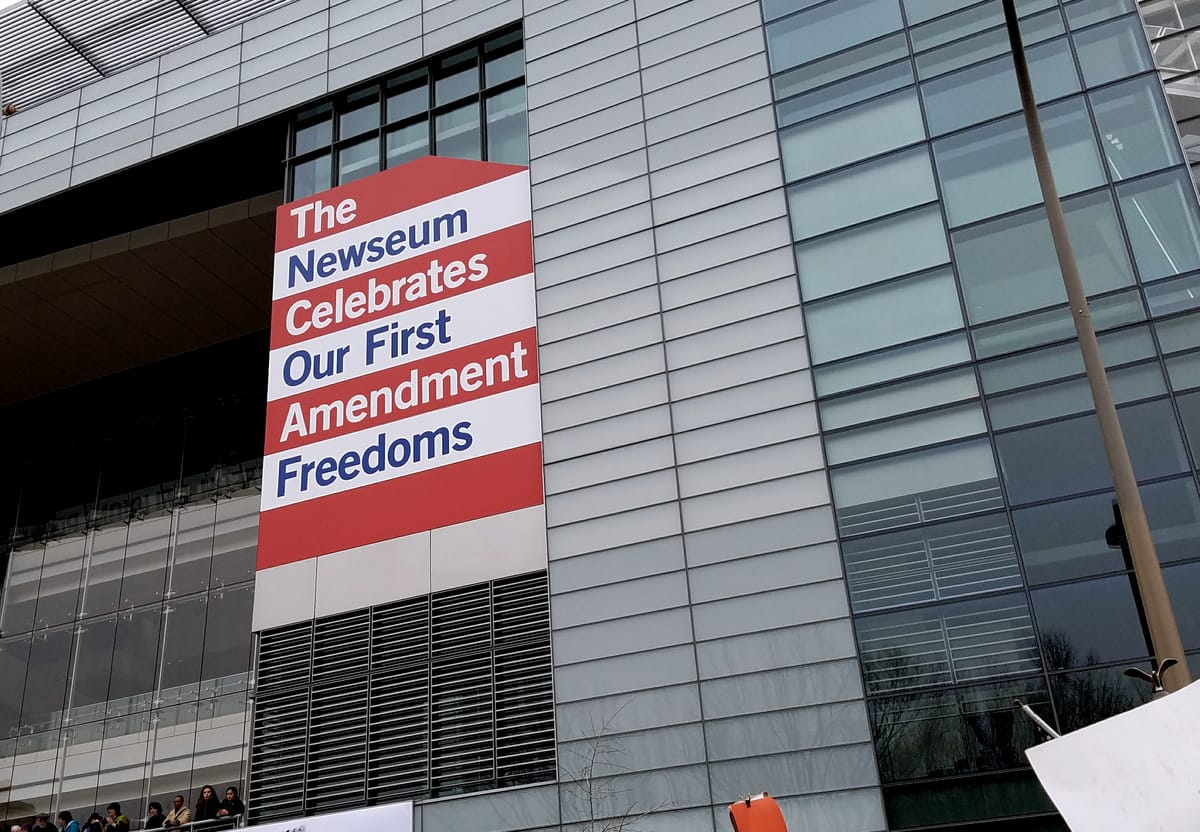
When the Founding Fathers drafted the First Amendment in 1791, they weren’t simply protecting a right; they were laying the cornerstone for a new kind of government. “Congress shall make no law… abridging the freedom of speech, or of the press,” they declared, embedding protections meant to guard against tyranny. The message was clear: Democracy can only thrive if people are free to debate ideas, challenge leaders, and seek truth without fear. More than two centuries later, those ideals remain essential, but applying them in today’s world requires nuance, responsibility, and vigilance.
Controlling Narratives, Controlling Power
History shows how quickly control of information becomes control of people. In 1798, barely a decade after the First Amendment was ratified, the U.S. passed the Sedition Act, criminalizing “false, scandalous, and malicious writing” against the government. Critics of President John Adams, many of them journalists, were jailed for denouncing his policies. Though the law was repealed, the precedent was troubling: dissent cast as disloyalty.
The pattern repeated across the 20th century. Stalin’s Soviet Union literally erased rivals from photographs and history books. Nazi Germany burned “un-German” literature and centralized media to spread propaganda. In 2020, China censored early reports of COVID-19 in Wuhan, delaying global awareness of the crisis. Even democratic nations have struggled: during the Vietnam War, the Nixon administration fought to block the release of the Pentagon Papers until the Supreme Court upheld the public’s right to know.
Censorship today often operates in quieter ways. Governments pressure platforms under the banner of “safety,” while algorithms disproportionately flag or bury posts from marginalized groups. During the 2020 Black Lives Matter protests, activists reported posts on police violence disappearing from feeds; suppression disguised as moderation.
Journalism’s Role in Truth Over Tribalism
The press has long been called the “Fourth Estate” because of its power to hold leaders accountable. Ida B. Wells embodied that in the 1890s, documenting lynchings at significant personal risk and forcing Americans to confront racial violence. In the 1970s, Bob Woodward and Carl Bernstein exposed Watergate, leading to Nixon’s resignation. Both cases proved journalism could rattle even the most entrenched power.
But the strength of journalism lies not just in reporting events, it’s in how those events are reported. Ethical reporters work to separate fact from opinion, verify sources, and provide context. Walter Cronkite became “the most trusted man in America” because he did precisely that. During the Cuban Missile Crisis, he explained the risks without stoking panic. Contrast that with the lead-up to the 2003 Iraq War, when unvetted claims about weapons of mass destruction passed for fact. The result was public support for a war built on faulty intelligence, and a deep wound to public trust.
Paywalls and the Paradox of Access
One of the most significant modern challenges to a free press isn’t government censorship, it’s economics. Paywalls at outlets like The New York Times and The Washington Post are understandable given the collapse of traditional ad revenue, but they also risk walling off truth from the people who can’t pay for it. Subscriptions often run into the hundreds of dollars a year, which puts them out of reach for many students, families, or communities already underserved by media. The result is a democracy where wealth starts to dictate who gets access to credible reporting.
That gap has consequences. People who can’t afford paywalls often turn to free platforms driven by algorithms, where sensationalism travels faster than facts. Pew Research found in 2023 that paywalls were linked to a growing reliance on social media for news, a dangerous trade-off when misinformation spreads quickly than corrections. During COVID-19, some outlets temporarily dropped paywalls for health updates, but much of the broader context remained locked. It’s a far cry from the 19th-century penny press, which deliberately kept prices low to expand literacy and civic engagement.
The current model risks creating a kind of information elitism, where people have as much knowledge and access as they can afford. A 2021 Knight Foundation study found that where communities had limited access to credible journalism, they are more likely to believe conspiracy theories, leaving them vulnerable to manipulation by those in power. In that sense, paywalls don’t just limit access; they actively deepen divides in our shared understanding of reality.
Supporters argue that all is necessary to sustain quality journalism, and they’re not wrong that reporting costs money. But other models exist: nonprofit outlets like ProPublica, public funding, or “pay what you can” systems that treat journalism as a public good rather than a luxury item. As Nikole Hannah-Jones has put it, “When we treat news as a product rather than a right, we abandon the ethos that the press serves the public first.”
The stakes are not abstract. Just as Ida B. Wells used pamphlets to bypass censored channels in her time, today’s paywalls raise the question: how can democracy function if large portions of the public can’t access the information needed to hold power accountable? Defending free speech isn’t only about resisting censorship; it’s about dismantling the economic and structural barriers that keep truth gated. That challenge is every bit as urgent as any political threat we’ve faced in the past.
Warning Signs of Eroding Free Speech
How do we know when free speech is at risk? We look for telltale patterns:
- Criminalizing Criticism: Russia’s 2022 law jailing citizens for calling the Ukraine invasion a “war.”
- Targeting Journalists: More than 150 journalists have been killed in Mexico since 2000 for reporting on corruption.
- Media Consolidation: Hungary’s government is consolidating 500 outlets under a single, loyal foundation.
- Gaslighting the Public: Leaders are branding factual reporting as “fake news” to confuse and discredit.
- Internet Blackouts: Myanmar’s military is shutting down the internet during its 2021 coup.
Free Speech Is More Than “Saying What You Want”
Throughout U.S. history, free speech has powered justice movements. Frederick Douglass used it to expose the horrors of slavery, suffragists used it to demand voting rights, and civil rights leaders used it to dismantle segregation.
But free speech has limits. The First Amendment restrains government, not private criticism or platform policies. In 1919, the Supreme Court’s Schenck v. United States decision upheld restrictions on speech that posed a “clear and present danger,” with Justice Holmes’ now-famous line about “falsely shouting fire in a theater.” That balance, protecting dissent while preventing harm, remains central today.
Where the line blurs most is between fact and opinion. Opinions fuel debate; disguising them as fact distorts it. “Pizzagate” in 2016 and false claims of election fraud in 2020 show how dangerous that distortion becomes when amplified online. Responsible outlets clearly mark opinions and fact-check contributors. Outlets that blur those lines erode public trust.
Why This Matters & What You Can Do
Free speech and a free press aren’t abstract ideals; they are the cornerstone of a healthy democracy. Without access to reliable information, polarization hardens, accountability fades, and civic participation shrinks.
The murder of journalist Jamal Khashoggi in 2018 was a grim reminder of what is at stake. A Washington Post columnist and outspoken critic of the Saudi government, Khashoggi was killed inside the Saudi consulate in Istanbul. The brutality of his murder shocked the world, but the more profound message was chilling: even high-profile journalists with international platforms are not safe when they challenge entrenched power. His death sent a warning far beyond Saudi Arabia, that silencing dissent can happen in plain sight, and that global outrage does not always translate into accountability.
Khashoggi’s case is not an isolated tragedy. In Russia, investigative journalist Anna Politkovskaya was assassinated in 2006 after years of reporting on human rights abuses in Chechnya. In Mexico, more than 150 journalists have been murdered since 2000, many for exposing corruption or cartel violence. These stories are not distant exceptions; they reveal a broader pattern of intimidation aimed at keeping citizens uninformed and unempowered.
And while violence against journalists is often associated with authoritarian regimes, the United States is not immune to its own pressures on the press. Local newsrooms here have been gutted by closures and budget cuts, leaving communities without watchdogs to monitor city halls, school boards, or police departments. Reporters covering protests have been arrested or assaulted, sometimes while clearly identifying themselves as press. More subtle forms of hostility, politicians branding journalists “the enemy of the people,” or crowds threatening reporters at rallies, chip away at public trust and create an atmosphere where truth-telling carries personal risk.
Each of these examples underscores a single truth: when journalists are silenced, societies lose more than individual voices; they lose access to the information that makes self-government possible. That loss doesn’t just weaken press freedom; it weakens democracy itself.
Franklin Roosevelt once warned: “Freedom of conscience, of education, of speech, of assembly are among the very fundamentals of democracy, and all of them would be nullified should freedom of the press ever be successfully challenged.”
How to defend those pillars today:
- Support independent media by subscribing or donating to nonprofit outlets.
- Practice media literacy by cross-checking with fact-checkers like Snopes or Reuters.
- Use your voice to challenge laws that punish protest or limit transparency.
- Engage in debate with civility, recognizing, as John Stuart Mill argued, that even flawed opinions help sharpen truth.
Final Thoughts
Democracy isn’t self-sustaining; it’s a collective project that demands constant care. The Founders knew that guaranteeing and maintaining the rights to free speech and a free press would inherently result in conflict, but they trusted citizens to navigate that tension.
Today, that trust is being tested at an unprecedented rate with surges in book bans targeting schools and libraries, efforts to criminalize the actions of protesters in several states, and even arrests of journalists reporting on public demonstrations. Meanwhile, AI-generated and targeted disinformation is overwhelming, taking over our social media and blurring our reality. These are not hypothetical threats. They are active challenges to the open exchange of ideas that democracy requires.
In an era of information overload and rapid technological change, the Founders’ vision demands more than vigilance; it requires a renewed commitment to truth, integrity, and the humility to listen.
The question is whether we can rise to meet those challenges. Protecting free speech today means more than opposing censorship; it means rethinking access, reinforcing integrity, and choosing truth over manipulation.
The strength of our democracy was never meant to be built on the loudest voices, but in the best-informed ones. Whether future generations inherit a society grounded in fact or one warped by power depends on what we do with the tools still in our hands.