Left vs. Right, a Costly Divide
Part one of the three part series on power and division
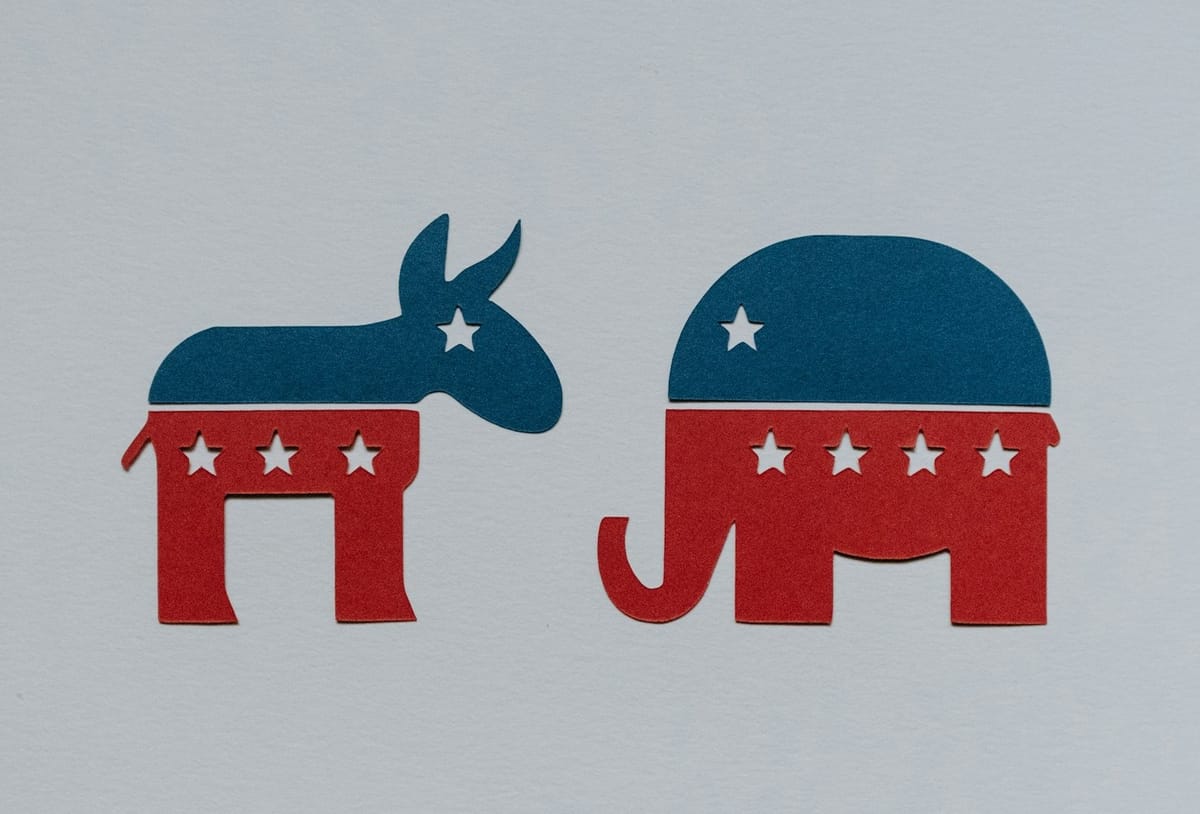
In nearly every corner of American life today, it feels like we are being asked to choose sides. Left or right. Conservative or progressive. Red or blue. The framing is so common that it feels natural. Yet when we pause and step back, the intensity of this divide is striking. Neighbors who once exchanged recipes or borrowed each other’s tools now avoid conversations altogether for fear of political disagreements. Families struggle to sit at the same table during the holidays. Social media thrives on outrage, feeding us bite-sized confirmation of our biases.
The problem is not disagreement itself. Disagreements are essential in a healthy democracy. The problem is that disagreement has hardened into hostility, where each side is not just wrong but seen as dangerous. This climate did not appear overnight, nor is it unique to the United States. But understanding how we arrived here, and what it means for our future, requires looking at both history and the present forces that keep us divided.
How We Got Here
Partisan division has always existed in America. The very first political parties, the Federalists and the Democratic-Republicans, clashed fiercely over the direction of the young republic. Debates about slavery, civil rights, immigration, and foreign policy have repeatedly split the country. Yet the tone of disagreement has changed in the last several decades.
Conflict has always been a part of American politics, but the way we navigate discourse has shifted noticeably over the past several decades. Many historians and political scientists point to the late 20th century as the moment when partisan divides began to harden into something deeper.
The Civil Rights Movement in the 1960s reshaped the political map. As the Democratic Party took on civil rights as part of its platform, many white voters in the South began moving toward the Republican Party, once known as the party of Lincoln. This realignment didn’t happen overnight, and it permanently altered how the two parties defined themselves.
In the 1980s and 1990s, the culture wars pushed the divide even further. Opinions about religion in public life, gender roles, and evolving social values became rallying points that drew sharp lines between conservatives and progressives. These debates were not limited to policy anymore and expanded to identity, community, and personal values, making compromise harder to reach.
By the early 2000s, the media landscape added another layer. Cable news channels carved out audiences by leaning into partisan commentary, and social media soon magnified that model. What once might have been disagreements contained to editorial pages or dinner table arguments were now amplified at a national scale, 24/7, with outrage rewarded and echoed back in real time.
Data bears this out. A Pew Research Center study in 2014 found that the share of Americans with “consistently liberal” or “consistently conservative” views more than doubled between 1994 and 2014. Even more concerning, feelings toward the opposing party grew colder. By 2016, a majority of both Democrats and Republicans viewed the other party as “a threat to the nation’s well-being.” What once was political disagreement had become existential.
Battle of Good and Evil
At the heart of today’s climate are narratives that pit groups against one another. These narratives cut across race, religion, gender, and class. Sometimes they arise organically out of social tension, but often they are strategically cultivated.
Consider how immigration debates are framed. Instead of focusing on the economic realities of our labor markets, such as falling wages, loss of workers’ rights, etc., the conversation often focuses on cultural or racial components. Similarly, debates about gender and family policy can quickly shift from practical discussions, such as how to structure parental leave, to battles over identity and values.
What makes these narratives so compelling is the way they rely on a persuasive melodrama, assigning the role of victim or villain to the relevant players. On one side, you are told that hardworking people are being displaced, silenced, or threatened. On the other hand, you hear that vulnerable groups are being oppressed, excluded, or denied dignity. Each version flips the script of who is being harmed and who is to blame.
The danger in framing it this way is that it makes compromise feel like a betrayal. Once the people you disagree with are cast as villains, then meeting in the middle seems immoral or unrealistic. And if you view your group’s identity as being the victim, you assign yourself a type of virtue, and acknowledging any complexity can feel like weakness. This victim-villain script shifts attention away from systems and policies, where the real causes often lie, and instead focuses on the people themselves.
When economic insecurity is explained as “those people taking your jobs,” or when cultural anxiety is described as “those people changing your way of life,” the focus is directed away from structural forces, globalization, automation, and policy choices to individual groups cast as either heroes or enemies. The story becomes sharper and easier to tell, but it leaves us further divided and less able to solve the root problems together.
A Cause for Concern
Some might argue that division is simply part of politics. But the level of hostility today poses risks beyond normal debate. A deeply divided society struggles to solve even basic problems. Gridlock becomes the norm. Public trust erodes. And most worrying, citizens begin to see each other not as fellow participants in democracy but as enemies.
History shows where this can lead. In the years before the U.S. Civil War, rhetoric escalated to the point where compromise became impossible. More recently, countries like Yugoslavia in the 1990s demonstrate how divisions along ethnic and political lines, fueled by propaganda, can fracture societies entirely. While the United States today is not on the brink of such collapse, the patterns are familiar enough to warrant concern.
Political scientist Barbara F. Walter, in her book How Civil Wars Start, notes that “it’s not just poverty or inequality that predict instability. It’s when societies divide along identity lines and when those divisions are stoked by leaders or media.” By that measure, the U.S. is in a fragile position.
When Labels No Longer Fit
More and more, the old labels, “left,” “right,” “Democrat,” “Republican”, just don’t resonate the way they used to. Gen Z and Gen Alpha show less interest in party boxes and more interest in issue alignment, authenticity, and change.
Data backs this up. According to a survey conducted by Springtide Research Institute, more than 50% of people ages 13-25 say they don’t identify with either major U.S. political party, viewing politicians and parties as performative or divisive. Only around 23% in that same group say they identify as Democrats, and about the same as Republicans. Meanwhile, Citizen Data found nearly 61% of young adults indicated they don’t affiliate with either party.
Recently, there has been a shift from prior generations that leaned more progressive. Younger Gen Z (18-24) is more open to Republican ideas and candidates than Older Gen Z (25-29), especially among men of all races. By contrast, women in the same age group remain more consistently aligned with progressive candidates and causes. This widening gender gap among the youngest voters challenges the assumption that Gen Z is politically unified. The common thread is not loyalty to a party or platform but alignment with whichever promises feel most urgent, relevant, or believable in the moment.
This is less about rebellion and more a result of frustration with rigid binaries. People who once supported progressive policies (on climate, racial justice, or health care) may feel let down by institutions and then lean toward an outsider candidate or even “the other side” when they believe it offers disruption.
Part of what drives this fluidity is the competing good guy/bad guy narratives they grew up hearing. On one side, voters are told that traditional values are under attack, that ordinary people are being silenced or displaced. On the other hand, they hear that vulnerable groups are being denied equality and opportunity by entrenched systems. Younger voters see both scripts play out daily on their feeds, often with exaggerated drama, and many reject the idea that either side alone captures the truth. They are less interested in choosing a “team” and more interested in addressing the conditions underneath the conflict.
The end result is that party loyalty is weakening, especially among younger voters. They’re less likely to vote based on identity or tradition, more likely to vote based on which issues are front and center, and whether they believe this moment will matter. Ideological purism is losing ground to urgency, authenticity, and sometimes, disillusionment.
If we continue assuming politics will always divide neatly into red and blue, we risk misunderstanding what is already happening. The political map is shifting under our feet, drawn more by snapshots than by long-standing alliances.
The Tactics of Misdirection
One reason these divisions persist is that they serve as a distraction. When the public is consumed by cultural battles, it often overlooks deeper issues that cut across partisan lines.
Take economic inequality. According to the Congressional Budget Office, the top 1% of households hold more wealth than the bottom 90% combined. Yet discussions about inequality rarely dominate headlines. Instead, attention is diverted to hot-button issues that ignite strong emotions but do little to change the balance of wealth or power.
Or consider healthcare. The U.S. spends nearly 18% of its GDP on healthcare, far more than other developed countries, yet outcomes like life expectancy and maternal mortality lag behind. Instead of focusing on structural reforms, debates often spiral into ideological fights over who “deserves” access or whether one group is unfairly benefiting at another’s expense.
This pattern is not accidental. Political campaigns and media outlets benefit from conflict. Outrage drives ratings, donations, and engagement. Corporations and lobbyists also benefit when public attention is directed away from regulatory or economic reforms that might threaten their bottom line.
Who Benefits Most
It’s worth asking: who gains from keeping the public divided?
The answer is layered. Politically, parties benefit when their base stays energized and complacent. Painting the other side as dangerous is one of the most effective ways to mobilize and misdirect voters.
Financially, media companies profit from sensationalism. Social media algorithms amplify content that sparks anger or fear because outrage keeps people scrolling longer.
Economically, concentrated wealth often benefits the most. When citizens are caught up in symbolic cultural battles, there is less scrutiny on policies that protect corporate interests. As author Thomas Frank argued in What’s the Matter with Kansas?, cultural fights have long distracted working-class voters from economic issues that affect their livelihoods.
The good guy/bad guy script continuously feeds this cycle. Each side is told a different story about who is being harmed and who is to blame, and while people are pulled into defending their role in that drama, the real beneficiaries are often elsewhere.
In short, division is profitable. Politicians gain power. Media companies gain clicks. Corporations gain freedom from scrutiny. The ones who lose are ordinary citizens, regardless of political affiliation, who see minimal progress on the problems that matter most to daily life.
Lessons From History
History offers sobering lessons about what happens when societies fail to resist divisive narratives.
- In 1930s Germany, economic hardship and national humiliation created fertile ground for scapegoating. Leaders redirected public anger toward minorities rather than structural issues. The result was catastrophic.
- In Rwanda in 1994, propaganda framed one ethnic group as an existential threat to another, leading to genocide. The speed with which rhetoric turned to violence demonstrates how dangerous unchecked narratives can become.
- In the U.S., the Red Scare of the 1950s showed how fear can be weaponized. Accusations of communism destroyed careers and reputations, while larger structural issues went unaddressed.
The speed with which rhetoric turned to violence shows how dangerous unchecked narratives can become. These examples are not meant to claim that the U.S. is on the verge of repeating them in full today. But they remind us that division, when not addressed, can have significant consequences.
Where Our Attention Should Be
If division serves as a distraction, then where should our attention be instead? The answer is not simple, but some themes cut across partisan lines.
Economic security is one. Surveys consistently show that Americans of all backgrounds worry about wages, job stability, and the rising cost of living. Healthcare, education, and housing affordability are not left or right issues; they are human issues.
Another area is democratic health itself. Protecting fair elections, ensuring equal access to voting, and reducing the influence of money in politics are concerns that should transcend party labels. Without a functioning democracy, no other issue can be effectively addressed.
Finally, we need to pay attention to how information is shaped. Media literacy, transparency in political advertising, and regulation of monopolistic tech platforms all play a role in reducing the manipulation that fuels division.
What Happens If We Don’t Shift
If society continues down the current path, several outcomes are likely. Political polarization will deepen, making compromise nearly impossible. Critical issues like climate change, healthcare reform, and infrastructure investment will remain stalled. Trust in institutions will continue to erode, leaving space for conspiracy theories and extremist movements to flourish.
Most concerning, civic ties will fray. The belief that we are all part of the same democratic ecosystem is fragile. If too many people see fellow citizens as enemies, the very foundation of democracy weakens. A house divided, to borrow Abraham Lincoln’s phrase, cannot stand indefinitely.
Final Thoughts
None of this means disagreement must vanish. A vibrant democracy depends on discourse, debate, and challenging narratives. But we can disagree without dehumanizing or placing people into binary categories of good and evil. We can recognize that cultural battles often serve as distractions while focusing our energy on the issues that materially affect our lives.
Shifting attention requires conscious effort. It means seeking out diverse sources of information, resisting sensationalism, and asking who benefits from the narratives we are being sold. It means building relationships across political lines, not because we will always agree, but because shared humanity is stronger than any algorithm.
The war between left and right is, in many ways, misplaced and outdated. It consumes our attention, shapes our media, and fuels endless cycles of outrage, while leaving the deeper issues unresolved. Understanding who benefits from this division and what it distracts us from is the first step toward reclaiming our civic life.
As political commentator Ezra Klein has observed, “polarization is not just people disagreeing. It’s people feeling they cannot trust or even live with those who disagree.” Reversing that trend is not only about changing politics, it is about rebuilding community.
We cannot wish away disagreement, nor should we. But we can refuse to let it be weaponized by or against us. Our history shows the dangers of division. Our present shows the costs of distraction. The future depends on whether we are willing to shift our focus toward the real issues that unite us all.
If we fail to make that shift, the consequences will not be borne by left or right alone. They will be borne us all.