
The American Party System
Today, the U.S. is often described as a two-party system, but the story of how we got here, and where we might go, is more nuanced than it seems.
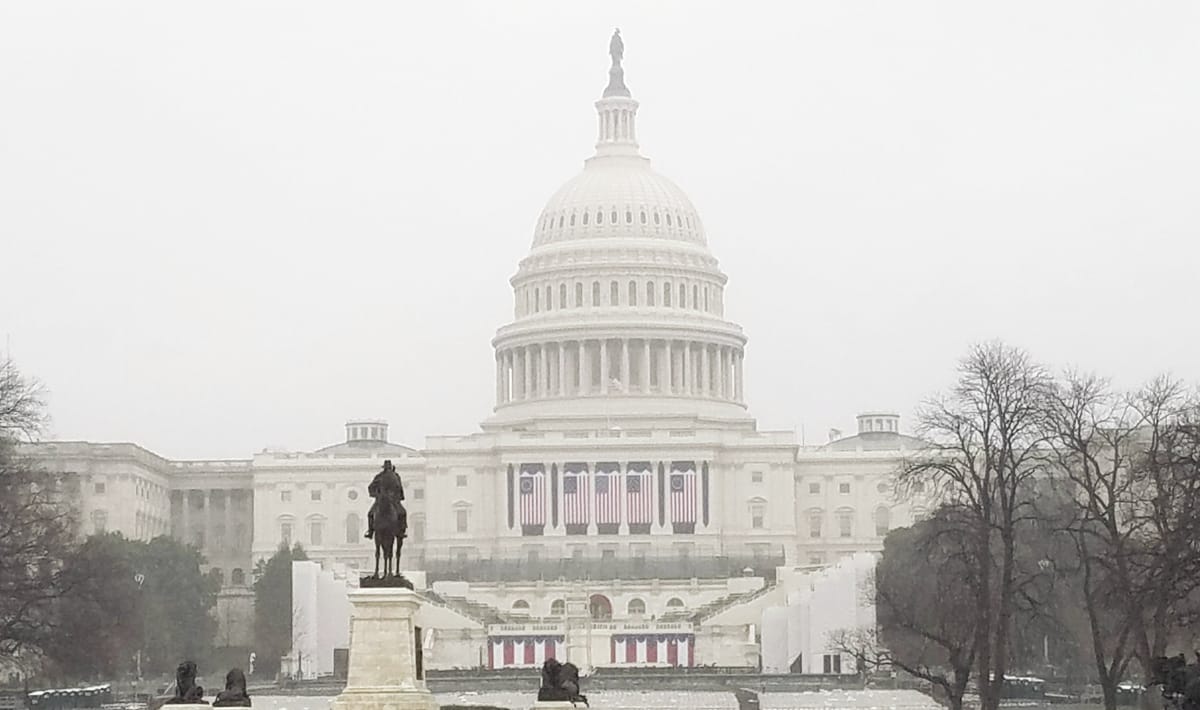
When George Washington left the presidency in 1796, he warned against the “baneful effects of the spirit of party,” fearing division would weaken the young nation. Yet just a few years later, political parties emerged anyway and they’ve shaped American democracy ever since. Today, the U.S. is often described as a two-party system, but the story of how we got here, and where we might go, is more nuanced than it seems.
A Quick History
Parties weren’t part of the Founders’ original blueprint, but disagreements over the role of government quickly led to factions. By the 1790s, the Federalists (led by Alexander Hamilton) favored a strong central government and trade ties with Britain, while the Democratic-Republicans (led by Thomas Jefferson) championed states’ rights and agrarian interests. This early divide set a pattern: competing visions of governance, even within a two-party framework.
Both major parties have had defining moments. Democrats pushed Social Security in the 1930s and the Civil Rights Act in 1964. Republicans led environmental reforms under Nixon (creating the EPA) and tax cuts under Reagan. But both have also struggled with internal divisions. The 1968 Democratic National Convention, marked by protests over the Vietnam War, exposed fractures between grassroots activists and party leaders. Similarly, the 2016 Republican primaries highlighted clashes between establishment figures and populist outsiders.
Third parties, like the Progressive Party in 1912 or Ross Perot’s Reform Party in 1992, have influenced debates but rarely won power. Why? The electoral system stacks the deck. In most states, a candidate needs only a plurality (not a majority) to win, discouraging voters from “wasting” votes on smaller parties.
Multiple parties matter because they give voters choices and force accountability. Imagine a sports game with only one team; there would be no competition and no push to improve. Similarly, parties challenge each other to refine policies and address public needs. Internationally, countries like Germany and Canada show how multi-party systems can create coalitions that balance diverse interests. But in the U.S., structural barriers like winner-takes-all elections and ballot access rules have historically kept third parties on the sidelines.
Understanding What “Conservative” and “Liberal” Even Mean
Labels like “conservative” and “liberal” can feel confusing, but they broadly reflect different priorities. Conservatives generally emphasize limited government, traditional values, and free markets. Liberals often prioritize social equality, environmental regulation, and public services. Moderates bridge these views, seeking compromise. These terms aren’t static, they’ve shifted over time. For example, the Republican Party, founded in 1854 to oppose slavery, later became associated with business interests under leaders like Calvin Coolidge. Democrats, once dominant in the segregationist South, realigned during the civil rights era to champion racial equality.
Internationally, these labels vary. Canada’s Conservatives support universal healthcare, while Britain’s Labour Party has moved toward the center. Context matters.
Division: A Feature, Not a Bug
Political division isn’t new, but the intensity of today’s polarization is amplified by systemic incentives. Gerrymandered districts, for example, create “safe seats” where lawmakers cater to extreme bases rather than broad constituencies. Media ecosystems profit from outrage, with algorithms prioritizing divisive content. A 2023 Stanford study found that inflammatory political posts generate 64% more engagement than neutral ones.
But perhaps the most direct driver is fundraising. Politicians who stoke division often reap financial rewards. A 2020 University of Maryland analysis revealed that congressional candidates who used polarizing language in emails (e.g., “fight socialism” or “defend democracy”) raised 3x more money than those who focused on policy. This creates a perverse cycle: controversy fuels donations, donations fuel campaigns, and campaigns fuel more controversy. Former Rep. Denver Riggleman (R-VA), who left Congress in 2021, put it bluntly: “Outrage is a business model. It’s not about governing—it’s about grifting.”
Even internationally, similar patterns emerge. In Brazil, former President Jair Bolsonaro leveraged social media to amplify conspiracy theories, rallying his base while deepening societal fractures. These tactics aren’t partisan; they’re transactional. As journalist Anne Applebaum notes, “Political entrepreneurs” worldwide have learned that “anger and fear are easier to sell than hope.”
Accountability and the Need for Renewal
Parties exist not just to win power, but to hold each other accountable. Historically, this has meant rigorous debate, oversight, and checks on overreach. For instance, during the prior Trump administration, Democrats led House investigations into ethics violations and pushed for transparency on issues like tax returns. But since the 2020 election, critics argue the party has struggled to define a cohesive opposition strategy, particularly on existential challenges like voting rights and climate action.
Some voters and analysts have raised concerns about Democratic leadership’s cautiousness. For example, despite holding a Senate majority in 2021–2022, the party failed to pass federal voting rights legislation, citing the filibuster (a procedural rule both parties have weaponized). This inaction frustrated advocates like Stacey Abrams, who called it a “missed opportunity” to protect democracy. Similarly, slow movement on student debt relief and policing reform has left grassroots supporters questioning whether party leaders prioritize incrementalism over urgency.
This isn’t to dismiss the complexities of governing. Narrow majorities, internal disagreements, and Republican obstruction all play a role. But as the opposition party, Democrats face heightened expectations to articulate clear alternatives. Younger leaders like Pete Buttigieg, Stacey Abrams, and Alexandria Ocasio-Cortez have pushed for assertive messaging on issues like infrastructure and healthcare, framing them as universal priorities rather than partisan wins. Buttigieg, former Secretary of Transportation, often emphasized bipartisan projects like bridge repairs, arguing, “Good governance shouldn’t have a party label.” Meanwhile, figures like Gavin Newsom have used state platforms to contrast Democratic policies with red-state approaches, such as California’s climate investments versus Texas’s energy deregulation.
By contrast, veteran leaders like Nancy Pelosi and Chuck Schumer face criticism for relying on outdated playbooks. Pelosi’s transactional deal-making, while effective in passing bills like the Inflation Reduction Act, can appear detached from the public’s desire for bold vision. Schumer’s focus on bipartisan deals, like the CHIPS Act, wins praise but risks signaling complacency in the face of democratic backsliding.
The American people deserve a robust opposition that doesn’t just react, but leads, whether through legislation, legal challenges, or public persuasion. As conservative commentator David Frum warns, “If Democrats won’t fight for their values, who will?” Renewal doesn’t mean abandoning tradition; it means ensuring leadership reflects the urgency of the moment.
Final Thoughts
Healthy democracy requires parties to evolve. That doesn’t mean abandoning principles but adapting to new challenges. Sweden’s multi-party system, for example, forces coalitions to negotiate policies, often leading to consensus on issues like climate change. Closer to home, ranked-choice voting in Maine and Alaska gives voters more flexibility to support third-party candidates without fearing a “spoiler effect.”
As historian Jon Meacham reminds us, “The American story is not about perfection. It’s about iteration.” Parties must balance tradition with innovation, accountability with openness. Whether through electoral reforms, fresh leadership, or grassroots engagement, the goal remains the same: a system where diverse voices are heard, and democracy grows stronger, not louder.
The Founders feared parties, but they also trusted future generations to navigate their complexities. Today, that means recognizing both the value of competition and the need for renewal. After all, democracy isn’t a static document, it’s a conversation. And conversations thrive when everyone has a seat at the table.