
Voters vs. Politicians, a Growing Divide
The final installment of the three part series on power and division
Americans have never had more ways to connect with their elected officials, with the flexibility to call, email, attend a town hall, post on social media, or tag elected officials. Yet despite this constant access, many people feel more disconnected from government than ever before. The trust Americans have in their government has hovered near record lows for years, with many believing politicians serve the needs of donors and party agendas before those of the people who put them in office.
The divide between citizens and their representatives exists at every level: local, state, and federal. While the details differ, the result feels familiar. Ultimately, people see decisions that shape their daily lives being made without their voice being considered, or worse, in direct opposition to it.
Local Government: Close in Proximity, Distant in Influence
Local government should be the most responsive to constituents, considering it represents a smaller and more geographically similar population. City councils, school boards, and county commissions control zoning, infrastructure, schools, and policing, making decisions in areas that impact us every day. Their meetings are public, and many local officials live within the same neighborhoods as the people they represent.
However, accessibility does not always equate to influence. Developers, contractors, and well-organized interest groups often dominate local meetings, while residents juggling jobs and families can’t devote hours to sitting in council chambers or keeping up with the various agendas. School boards, which should be focusing on budgets, educational standards, and teacher contracts, have become battlegrounds for the national culture war. That shift has left many community members frustrated, as conversations about class sizes, academic standards, or teacher pay are often drowned out by debates imported from cable news or the latest tweets.
Even so, trust in local government is relatively higher than at any other level. Pew found in 2023 that about a third of Americans express confidence in their local leaders. Still, that number is sobering and doesn’t leave much confidence in the overall system. Even when institutions are literally down the street and members sit within the communities they serve, two-thirds of voters continue to feel unrepresented or unheard.
State Government: Polarization by Proxy
State legislatures often sit in the middle, both literally and figuratively, between local accessibility and national disconnect. They have enormous power over decisions related to healthcare, wages, schools, and voting rights. Yet in many states, lawmakers seem more attuned to donors, party leaders, and national agendas than to the people they represent.
A 2020 study by political scientists at Yale and UC Berkeley found that state legislators’ roll call votes align with the majority of their constituents less than half the time. In gerrymandered districts, that alignment drops even further, since politicians cater to their key donors and party base instead of the general electorate.
Healthcare legislation is indicative of this. While most Americans say they want affordable coverage, as of 2023, ten states still had not expanded Medicaid, leaving millions uninsured despite the federal government covering most of the cost. Decisions often reflected ideology or pressure from industry groups rather than voter preference.
Minimum wage laws follow a similar pattern. In 2021, Florida voters approved a $15 minimum wage by ballot initiative with 61% support. However, that only happened after lawmakers refused to take action. Across the country, surveys show that roughly two-thirds of Americans support raising the federal minimum wage; yet, many state legislatures stall or block action, often swayed by chambers of commerce and business lobbies.
Structural issues exacerbate the divide, and gerrymandered districts often insulate many legislators from accountability. Low voter turnout in critical elections, especially in off-years, results in outcomes being decided by a small base. Together, these factors enable politicians to prioritize partisan agendas or donor networks over the interests of the majority of voters.
Federal Government: Gridlock, Money, and Distance
If the gap feels wide at the state level, it is a gaping hole in Washington, D.C. Congress’s approval rating often sits below 20% and confidence that the federal government will “do the right thing” is at historic lows.
The influence of money is irrefutable. According to OpenSecrets, over $4.1 billion was spent on federal lobbying in 2023, with pharmaceutical companies accounting for more than $370 million alone. And obviously, it works; otherwise, why would corporations continue to invest more and more, year over year, in lobbying efforts?
By comparison, constituents are at a significant disadvantage and have no means to compete. This is evident when you consider whose interests are generally favored by our legislators.
A landmark study by Princeton and Northwestern University analyzed over 1,700 policy outcomes spanning a two-decade period. It found that when the preferences of average Americans clashed with those of economic elites or well-organized interests, the public’s influence was “minuscule, near zero.” In other words, unless wealthy donors or lobbyists were on board, the majority opinion of voters often didn’t matter.
That helps explain why ideas with broad bipartisan support, like universal background checks for gun purchases (supported by 80-90% of Americans) or paid family leave (supported by around 70%), consistently stall. Politicians are aware that these measures are popular, but their campaign funding and party incentives are apt to push them in the opposite direction.
Longevity in office makes the disconnect even more significant. The average age in the 119th Congress is nearly 58 in the House and 64 in the Senate, with almost 20% of members over 70. Many have served for decades without term limits, building careers that become increasingly reliant on lobbyists, PACs, and showmanship rather than on everyday constituents. As tenure lengthens, lawmakers become more insulated in their seats, with their seats safer, their funding pipelines more entrenched, and their perspectives further removed from the lived realities of younger, more diverse voters. The result is a governing body that resists change, is highly influenced by donors, and is far removed from the lives of younger voters or the world that first elected them.
Politics and the Media Age
The evolution within the media landscape over the past 100 years has constantly reshaped politics. Each medium has forced politicians to adapt or risk irrelevance.
Radio made voice and tone matter. Franklin Roosevelt mastered the format with his “Fireside Chats,” which brought FDR into people’s homes and made millions feel as though the president was speaking directly to them.
Television transformed appearance into a form of political currency. The 1960 Nixon-Kennedy debate is remembered not for the differences between their stances on policy, but for Kennedy’s camera-ready composure and Nixon’s haggard look under the hot lights. The package in which the content was presented became just as, if not more important, than the content itself.
Today, politics is fueled by constant media coverage. Leaders aren’t just judged on how they govern, but on how people view their brand, which is often tied to their ability to trend and maintain social relevance. A viral clip can do more for a career than a legislative achievement, and outrage gets rewarded with airtime, fundraising boosts, and clicks. In fact, a 2021 Pew study found that nearly 70% of Americans believe social media rewards politicians who take extreme positions, which reflects how algorithms tend to favor conflict and spectacle over substance.
Behind closed doors, the behavior often looks different. Lawmakers in private caucus meetings or off-the-record briefings may admit that specific policies are popular with constituents but impossible to advance without donor support. The 2012 “Mitt Romney 47%” fundraiser recording, in which he described half of Americans as “dependent on government,” offered a stark contrast between a politician’s polished public persona and the remarks made to donors. Similarly, during the 2021 infrastructure negotiations, leaked reports revealed that senators acknowledged in private the bill’s climate measures were popular, even within their own states, but chose to water them down to appease industry groups.
Media incentives perpetuate a performance culture, where outlets reward conflict because it drives ratings, and politicians respond accordingly. Publicly, that means having elected officials feed the left-versus-right outrage cycle to keep people engaged and party leaders satisfied. Privately, it means prioritizing lobbyist meetings, PAC contributions, and fundraising calls over constituent town halls.
In 2023, members of Congress collectively spent more than 4,000 hours fundraising each week, according to watchdog estimates, a significant amount of time that was previously dedicated to legislating or serving their constituents. That shift has boxed politicians in. To keep their seats, they need wealthy donors. To stay relevant, they need a solid media brand and constant engagement. To maintain party standing, they must engage in political theater and deliver partisan monologues that drive attention. When politicians are expected to prioritize performance, it leaves little room for representing the full spectrum of their constituents’ needs.
Why the Divide Exists
Several overlapping forces explain the growing gap between citizens and representatives:
- Money in politics. Campaigns depend on donors, PACs, and industry lobbies, creating dependency that competes with constituent needs.
- Polarization as a strategy. Politicians use left vs. right divides not just because they exist, but because they energize bases and open fundraising doors.
- Media incentives. In an age of 24/7 coverage, sound bites and theatrics often overshadow the substance of policy.
- Longevity without limits. Decades-long careers allow deep ties to power structures while loosening ties to ordinary life.
- Voter disengagement. Low turnout and apathy leave politics more vulnerable to the influence of small, organized interests.
Final Thoughts
The divide between citizens and their representatives is no accident. It’s the product of money in politics, partisan incentives, and a media environment that rewards spectacle over substance. Local governments are distracted by national culture wars. Statehouses are distorted by gerrymandering and donor influence. And Congress benefits from gridlock, complacency, and corporate obedience.
The consequences are endless. When people believe politicians don’t listen, they disengage. That disengagement shrinks the electorate, which in turn makes officials even more dependent on donors and party loyalists. The cycle feeds on itself. This disconnect also weakens our ability to solve problems. Challenges such as climate change, infrastructure, and healthcare require cooperation across various levels of government. If citizens don’t trust officials or view them as serving someone else, building that cooperation becomes nearly impossible.
Politicians have learned to lean on left vs. right battles because they keep their bases energized and fundraising strong. Many have supported corporate influence, or at least complied with it, because it’s the surest way to stay funded. In doing so, they’ve boxed themselves in: to win reelection, they must cater to donors, remain visible in the media, and reinforce partisan divides, even when those choices don’t align with what the public actually wants.
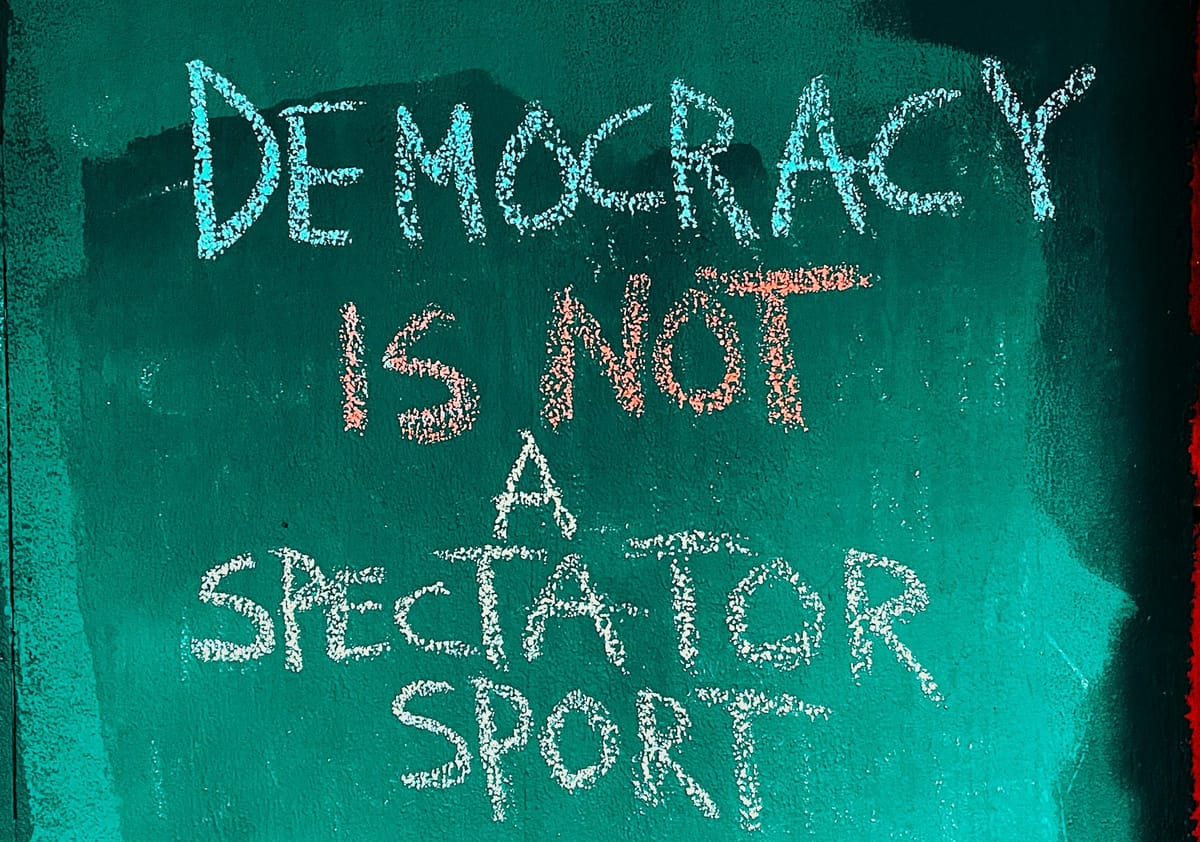
If history is an indicator, then there is hope that this divide isn’t permanent. Institutions bend when enough people demand it. Citizens can close the gap by voting in higher numbers, participating in local politics, supporting reform efforts, and insisting that their representatives be accountable.
Democracy isn’t just about electing leaders every few years; it’s about holding them accountable to the people in a way that ensures they don’t forget who they work for. The challenge now is whether we’ll continue letting money and media define that relationship, or whether we’ll reclaim it for ourselves.