
Your Voice, Your Vote
Voting is not about perfection; it’s about participation.
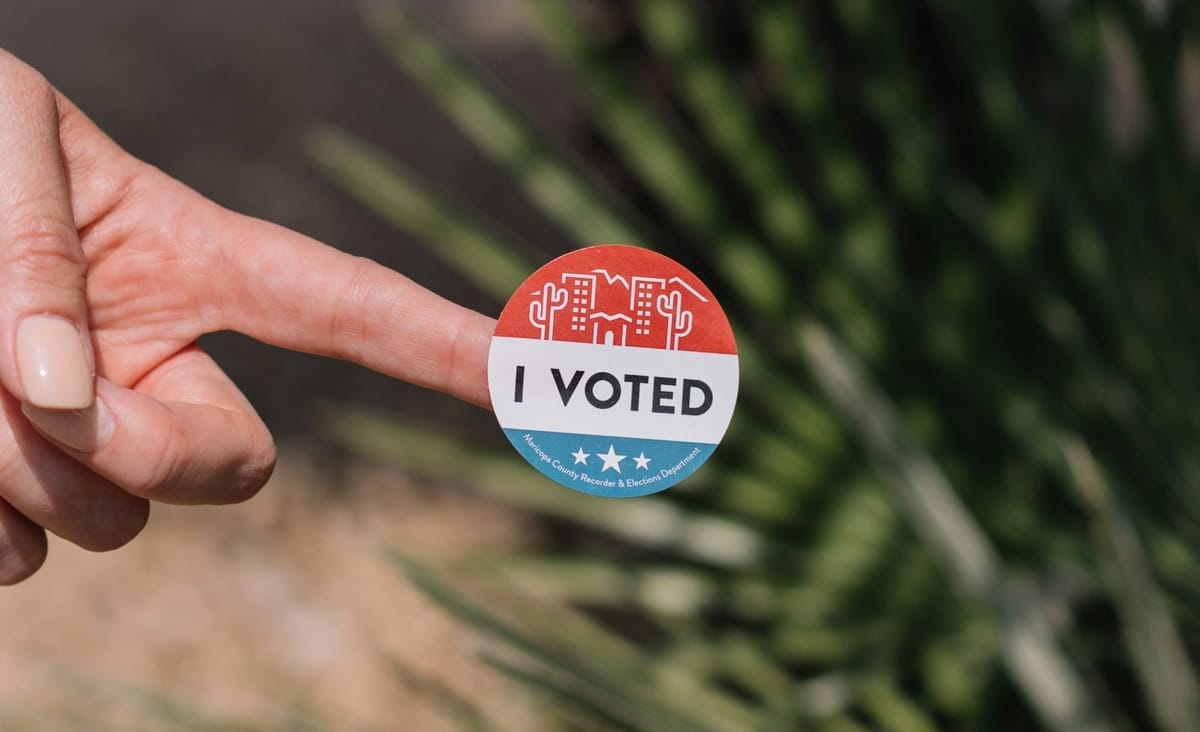
Voting in the U.S. should be straightforward, especially since elections are considered the cornerstone of our democracy; however, the system can often feel messy, outdated, or even pointless. Which is understandable. Politics today is complicated and divisive, frequently using the topic of voting to serve the party or politician rather than the voter. However, when you step back and consider how voting has shaped the country and continues to influence our daily lives, it’s hard not to recognize its importance.
Elections are not simply a to-do list to check off every few years. It’s the main way we, as citizens of the United States, have a say in who leads, in what ways resources are spent, and which priorities rise to the top. And despite the flaws, our right to vote is still worth defending.
The Journey to the Ballot Box
The story of voting rights in America is messy, uneven, and often painful. At the country’s founding, you could only cast a ballot if you were 1) white, 2) male, 3) over 21, and 4) a property owner. That left the vast majority of people (women, Black Americans, Asian Americans, Indigenous people, and the poor) without a voice. And the right to vote wasn’t guaranteed to all white men either. For example, Irish immigrants in the 1800s were often targeted with literacy tests, character debates, religion restrictions, residency hurdles, and outright hostility that made getting to the ballot box anything but easy.
Over time, the circle of participation widened. After the Civil War, the 15th Amendment was added in 1870, prohibiting the denial of the vote based on race. In theory, Black men had the right to vote. In practice, literacy tests, poll taxes, intimidation, and violence kept many away from the polls for nearly a century.
Women fought for decades for equal voting rights. That fight culminated in 1920 with the passage of the 19th Amendment, a milestone worth celebrating, even though women of color continued to face significant barriers to equality.
In 1965, after years of activism and tragedy (Bloody Sunday in Selma being one of the starkest examples), Congress passed the Voting Rights Act, 100 years after the end of the Civil War. It banned racial discrimination in voting and placed certain states under federal oversight to prevent them from changing rules in ways that could disenfranchise minority voters. It was one of the most significant civil rights victories of the 20th century.
Then, in 1971, amid the Vietnam War, the 26th Amendment lowered the voting age to 18. The argument was simple: if you were old enough to be drafted, you were old enough to have a say in the leaders sending you into conflict.
Every step forward was hard-won, and none of it was inevitable. Which is why when debates about voter ID laws, polling place closures, or gerrymandering surface today, they should be taken seriously. History shows that access to the ballot has always been fragile and that remains the case today, with many U.S. citizens continuing to face barriers.
Today’s Voting Restrictions
Even with all the progress that’s been made, not every U.S. citizen has full access to the ballot. The restrictions aren’t as apparent as literacy tests or poll taxes, but they still leave millions of people on the sidelines.
One of the most significant barriers is tied to felony convictions. The rules depend entirely on where you live. In Maine and Vermont, you never lose your right to vote, even if you’re serving time in prison. However, in places like Florida, Iowa, and Kentucky, a felony record can result in a lifetime ban, unless you receive clemency. Most states fall somewhere in between, restoring rights after prison or parole, but the patchwork system leaves more than 4 million Americans unable to vote.
Citizens who live in U.S. territories face another wall. Places like Puerto Rico, Guam, American Samoa, the U.S. Virgin Islands, and the Northern Mariana Islands are U.S. territories, and their residents are U.S. citizens; however, they cannot vote for president. They can elect a delegate to Congress, yet those delegates cannot vote on final legislation. It’s a frustrating contradiction: citizens who pay certain federal taxes, serve in the military, and are subject to U.S. law, but have no equal voice in national elections.
Washington, D.C., is in a similar bind. Residents can vote for president, thanks to the 23rd Amendment, but they have no voting representation in the House of Representatives or the Senate. They can send one delegate to the House, who can’t cast a binding vote, and have no Senate representation at all.
Of course, the basic requirements remain: you must be a U.S. citizen, at least 18 years old by Election Day, and a resident of the state where you register. Homeless citizens can and do vote, but they often have to navigate extra steps by using the address of a shelter or a public landmark.
In addition to these formal rules, there are softer barriers that still have a 2significant impact. Voter ID laws, which vary by state, can make casting a ballot more difficult for those without easy access to government-issued identification. Some states aggressively purge voter rolls if people haven’t participated in recent elections. And the closure of polling places, especially in rural counties or densely populated urban areas, can turn voting into an hours-long wait that discourages turnout.
While the image of American democracy is that every adult citizen has an equal voice, the reality is more complex. Millions of citizens, through criminal records, geography, or bureaucracy, still find the ballot box out of reach.
Tilting Scale of the Electoral College
If you’ve ever wondered why presidential elections focus on a handful of states, the answer lies in the Electoral College.
The framers of the Constitution in 1787 created it as a compromise. They worried about pure direct democracy, but also wanted states, big and small, to feel fairly represented. Each state’s electors equal its members of Congress. That means smaller states get a bit of extra weight compared to their population.
For much of history, this system operated without much controversy. But in recent decades, it has produced outcomes where the candidate who won the popular vote lost the presidency. It happened in 2000 and again in 2016, leading many Americans to wonder whether their votes “count” equally.
As a result of the Electoral College, a voter in Wyoming has significantly more influence per person than a voter in California. Campaigns pour resources into purple states, like Pennsylvania or Wisconsin, while ignoring states with predictable outcomes. Defenders argue the system ensures rural voices aren’t drowned out by urban majorities. Critics counter that it distorts democracy and creates a nation where only a few “swing” states matter.
There’s no easy fix here. Abolishing the Electoral College would require a constitutional amendment, which is unlikely to occur in the current climate. But the frustration it creates fuels broader debates about how representative our elections really are.
The Artistic License of Gerrymandering
If the Electoral College decides how we pick presidents, gerrymandering decides how we pick Congress.
The term dates back to 1812, when Massachusetts Governor Elbridge Gerry signed a redistricting plan with districts so contorted that one resembled a salamander. The practice has been around ever since: redraw district lines in a way that favors your party, and you can tilt outcomes before a single ballot is cast.
The implications today are enormous. In Texas, maps signed into law are expected to give Republicans several more House seats, despite population growth being primarily driven by communities of color. In California, Democrats have pushed mid-cycle redistricting, sparking fierce debates about fairness and whether independent commissions are genuinely independent.
This isn’t just about maps. It’s about power. Gerrymandering allows politicians to choose who their voters are rather than the other way around. This generally results in “safe” districts where incumbents face little to no competition and take power away from voters. Proponents of reform have proposed a range of solutions to combat gerrymandering, from independent commissions to ranked-choice voting. The counterargument is that there is no such thing as a perfectly neutral map, and any decision to redistrict will inevitably be influenced by politics.
Whichever side you lean toward, the result is the same: when district lines are drawn to protect power, they disenfranchise voters.
Voting Reforms
Not all election talk is frustrating. Some reforms offer genuine promise.
Ranked-choice voting allows people to rank candidates by preference, rather than selecting just one. If no candidate earns a majority, the candidate with the fewest votes is eliminated, and their votes are redistributed to the next preferred candidate on their list. This continues until someone passes 50%. The system reduces the “spoiler effect,” encourages more civil campaigns, and gives independents a better chance. Critics worry that it confuses voters or complicates the counting process; however, cities like New York and states like Maine have demonstrated that it can work when implemented carefully and paired with effective voter education.
Mail-in ballots are another tool that has grown in use. Oregon, Washington, and Colorado conduct nearly all elections by mail. Fraud rates are extremely low, and voter turnout is often higher than the national average. During the pandemic, voting by mail expanded quickly across the country. Opponents worry about delays, lost ballots, or security concerns, while supporters point to decades of successful implementation and argue that it opens the door for rural, elderly, and disabled voters who might otherwise struggle to reach a polling place.
Both reforms highlight a central tension: how to balance access with trust. Any system will have tradeoffs, but evidence shows these approaches can increase participation without sacrificing integrity.
Participation is Critical
While it’s common to hear people say their vote doesn’t matter, history suggests otherwise.
In 2000, the presidential election came down to 537 votes in Florida. In 2017, control of the Virginia House of Delegates hinged on a single race that ended in a tie, broken by drawing lots. Local school board races, city council seats, and bond measures are often decided by margins in the dozens or hundreds.
Even if your individual ballot doesn’t flip an outcome, your collective participation with others who share your concerns can. And voting isn’t just about who sits in the White House. Local elections and measures decide on school funding, policing, zoning, and healthcare. Those decisions shape everyday life in ways national politics often doesn’t.
Studies also show that when voter turnout is higher, policies tend to reflect a broader range of interests, not just those of the most active or wealthy groups. In other words, your absence matters just as much as your presence.
Modern Voting Challenges
Voting today faces hurdles that look different from those in the past but can be just as consequential.
- Misinformation spreads quickly online, leading people to believe false dates, locations, or rules.
- Voter ID laws and roll purges disproportionately affect minority and low-income voters.
- Polling place closures often create long lines in urban areas.
At the same time, there are reasons for optimism. More states allow online registration. Early voting options are expanding. Younger voters are turning out in higher numbers than in previous decades, often motivated by issues like climate change, reproductive rights, and student debt.
The tension between suppression and access has always existed. What’s different now is the speed of change and the scale of misinformation.
Your Vote is Worth Protecting
The right to vote has been expanded, restricted, fought for, and reaffirmed for more than two centuries. It remains the central lever of democracy. Protecting that lever requires constant vigilance.
Some worry that reforms like ranked-choice voting or automatic registration are too expensive or overly complicated. Others argue that the cost of not investing, such as lower turnout, weaker trust, and unequal representation, is far higher. While both perspectives deserve consideration, the evidence shows that in states that modernized, the benefits outweighed the drawbacks.
Lyndon Johnson, when signing the Voting Rights Act, called the vote “the most powerful instrument ever devised by man for breaking down injustice.” That’s a lofty statement, but it captures the truth: the ballot has always been the people’s best tool for shaping power.
Final Thoughts
Voting in America has never been a static process. It has expanded to include new voices, shifted to address new challenges, and stumbled in the face of resistance. The Electoral College, gerrymandering, ranked-choice voting, and mail-in ballots each represent a piece of the ongoing experiment.
It’s easy to be cynical. It’s tempting to tune out. However, when we do, the system tilts even further in favor of those who already hold power. Voting is not about perfection; it’s about participation and making sure the people who decide on your schools, your healthcare, your roads, and your rights, hear from you.
The ROI of voting isn’t measured in immediate gratification. It’s measured in long-term fairness, accountability, and representation. That’s what makes it worthwhile.